The start of their anecdote. The album's other cards are for you to discover in the game.
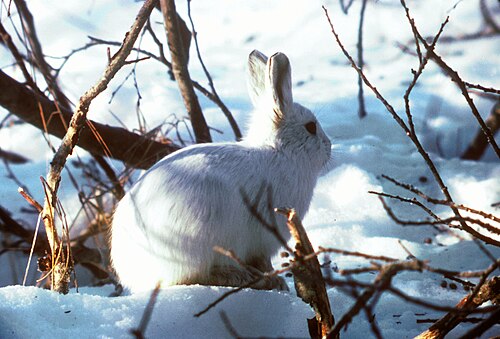
Alaskan hare
Leporidae
Lepus othus · Least concern
No burrow for the Alaskan hare: it never digs one, nesting in the open on the tundra of western Alaska, and spends most of the year alone. At 2.9 to 7.2 kg it is one of the largest hares in the world, and its hind feet, 20 cm long, carry it easily over snow and are reportedly used to fight off birds of prey attacking from above.
Photo: This image originates from the National Digital Library of the United States Fish and Wildlife Service at this page This tag does not indicate the copyright status of the attached work. A normal copyr (Public domain)
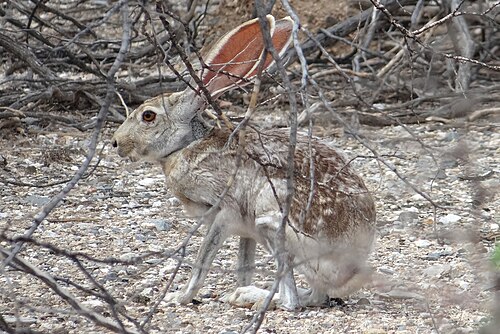
Antelope jackrabbit
Leporidae
Lepus alleni · Least concern
It has been called the 'handsomest' of hares. The antelope jackrabbit was also one of the last North American mammals to be formally described, in 1890 by Edgar Mearns, who named it after museum curator Joel Asaph Allen. Its ears reach 14 to 17 cm, and it can hop at an estimated 72 km/h.
Photo: Luxil (CC BY-SA 3.0)
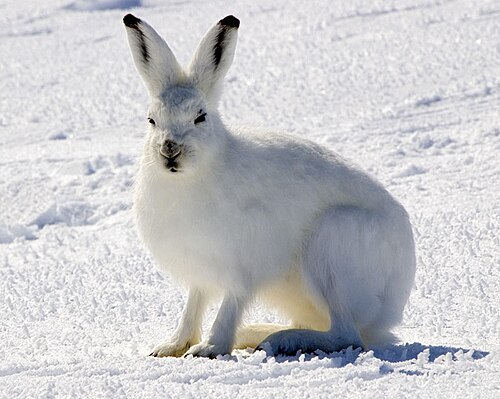
Arctic hare
Leporidae
Lepus arcticus · Least concern
Fat makes up close to 20% of the Arctic hare's body, and its ears and legs are short: it is built for the tundra. One of the largest hares, it can run at up to 40 mph (64 km/h) and digs burrows in snowdrifts up to 188 cm long.
Photo: Steve Sayles from Rankin Inlet, Nunavut, Canada (CC BY-SA 2.0)


