The start of their anecdote. The album's other cards are for you to discover in the game.
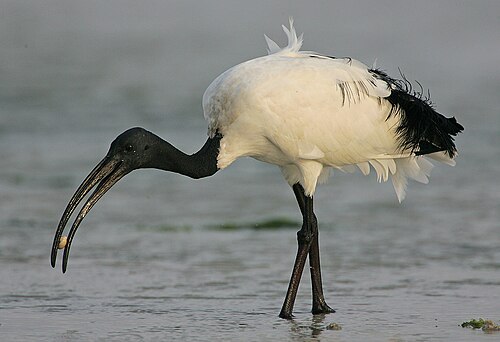
African sacred ibis
Threskiornithidae
Threskiornis aethiopicus · Least concern
Ancient Egypt linked it to the god Thoth, yet the African sacred ibis has since disappeared from Egypt. Early English writers called it the 'Egyptian ibis', the 'emseesy' or the 'ox-bird', and Cuvier named it Ibis religiosus in 1817.
Photo: Steve Garvie from Dunfermline, Fife, Scotland (CC BY-SA 2.0)
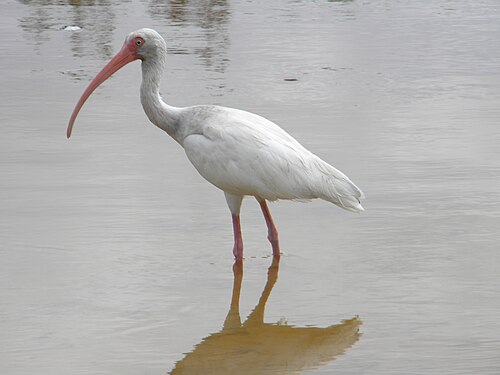
American white ibis
Threskiornithidae
Eudocimus albus · Least concern
It never sees what it catches: it probes the bottom of shallow water with its red-orange bill and feels for crayfish, its favourite food. The naturalist Mark Catesby took the young for another species, which he called the brown curlew.
Photo: Maximilian Paradiz from Amsterdam, Netherlands (CC BY 2.0)
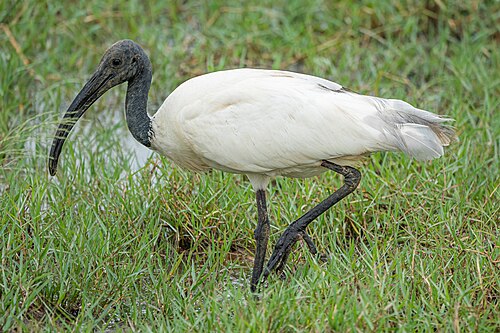
Black-headed ibis
Threskiornithidae
Threskiornis melanocephalus · Least concern
In its range, no other native ibis combines all-white plumage with a black head and neck; its down-curved bill and legs are black too. Adults measure 65 to 76 cm. Though seen as a wetland bird, it forages in many natural and man-made habitats, from India to Japan.
Photo: A.Savin (FAL)


