The start of their anecdote. The album's other cards are for you to discover in the game.
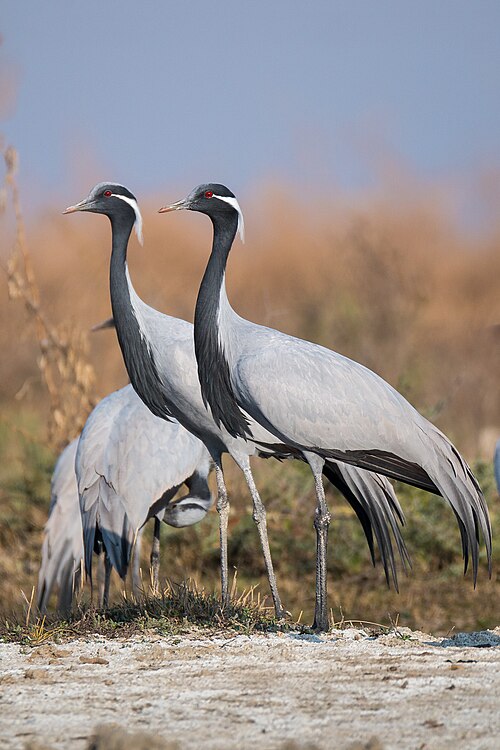
Demoiselle crane
Gruidae
Anthropoides virgo · Least concern
The smallest of all cranes owes its name to its manners: Albin wrote that it seemed to imitate a woman affecting grace in her walking, bows and dancing. Known as koonj in North India, the demoiselle crane features prominently in the region's poetry and idiom.
Photo: Sumeet Moghe (CC BY-SA 3.0)
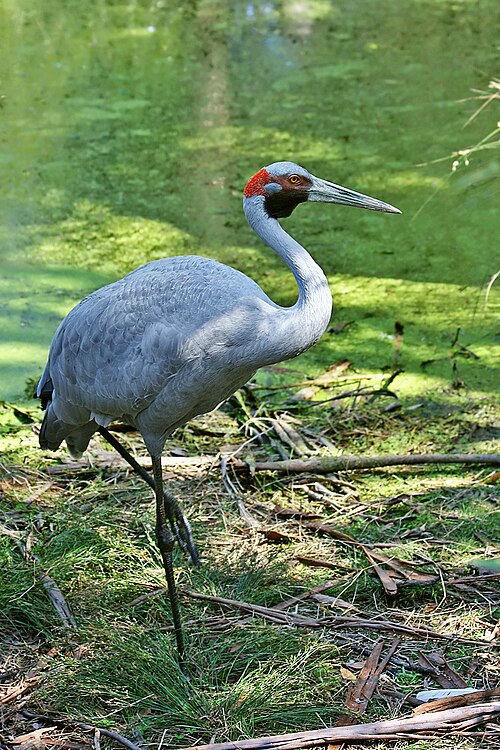
Brolga
Gruidae
Grus rubicunda · Least concern
Australians once called it the native companion. When the naturalist George Perry first described it in 1810 he took it for a heron. He also noted that it was easy to tame. Its courtship dance resembles that of other cranes.
Photo: jjron, edited by Fir0002 (CC BY-SA 3.0)
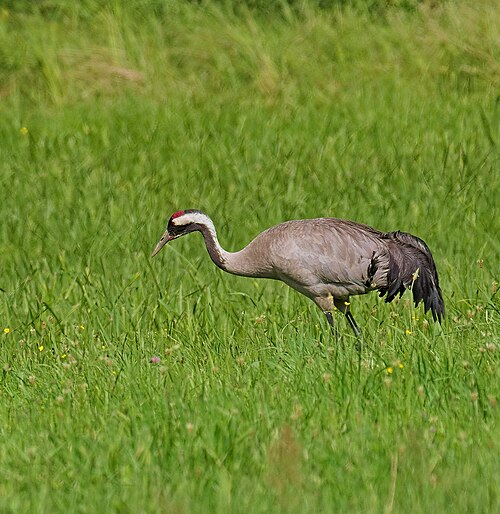
Common crane
Gruidae
Grus grus · Least concern
Of all the world's cranes, only four species are considered neither threatened nor conservation dependent, and the common crane is one of them. Its largest breeding populations are in Russia, Finland and Sweden, and a crane that loses its mate may court a new partner the following year.
Photo: Andreas Eichler (CC BY-SA 4.0)


