The start of their anecdote. The album's other cards are for you to discover in the game.
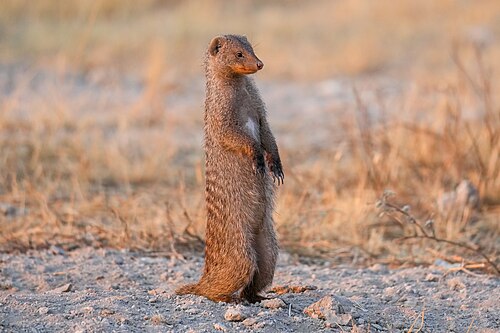
Banded mongoose
Herpestidae
Mungos mungo · Least concern
Unlike most mongooses, the banded mongoose lives in colonies of 5 to 75, about 20 on average, sheltering in dens such as termite mounds. Males guard females to control breeding, but with little success: the females actively seek out matings with other males.
Photo: Giles Laurent (CC BY-SA 4.0)
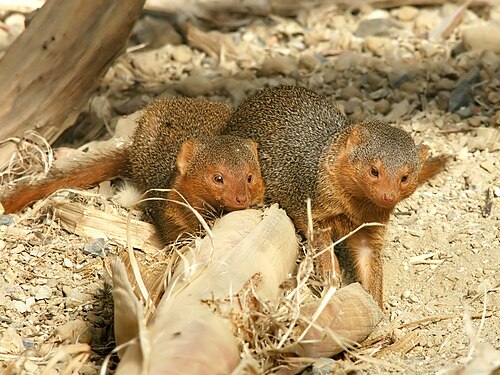
Common dwarf mongoose
Herpestidae
Helogale parvula · Least concern
Africa's smallest carnivore has a partner: hornbills seek out its packs to forage together, and each warns the other of birds of prey. Within the pack, the breeding female ranks first and her mate second.
Photo: Hans Hillewaert (CC BY-SA 3.0)
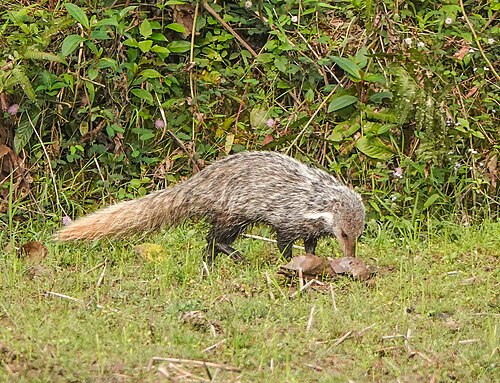
Crab-eating mongoose
Herpestidae
Herpestes urva · Least concern
Despite its name, the crab-eating mongoose eats far more than crabs: fish, snails, frogs, rodents, birds, reptiles and insects. It hunts along the banks of streams and is thought to be a good swimmer. Brian Houghton Hodgson first described it in 1836 from a specimen from central Nepal.
Photo: Rejoice Gassah (CC BY 4.0)


