The start of their anecdote. The album's other cards are for you to discover in the game.
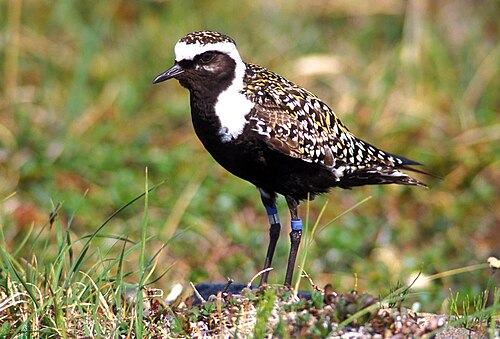
American golden plover
Charadriidae
Pluvialis dominica · Least concern
Its genus name comes from the Latin for rain, as golden plovers were believed to flock when rain was coming. The American golden plover also flies one of the longest known migration routes, over 40,000 km (25,000 mi). The male incubates the eggs by day, the female by night.
Photo: O. W. Johnson (Public domain)
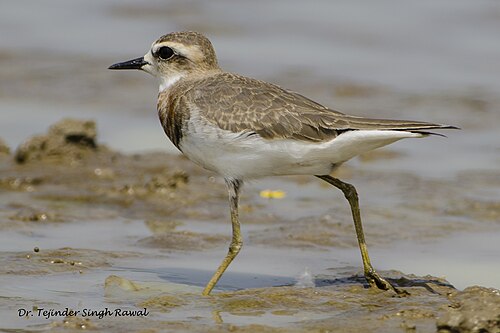
Caspian plover
Charadriidae
Anarhynchus asiaticus · Least concern
In old Latin names, asiaticus usually meant the bird was first found in India. This plover breeds in loose colonies in western and central Asia, laying three eggs on bare ground, then flies to eastern and southern Africa to escape the winter.
Photo: Tsrawal (CC BY-SA 3.0)
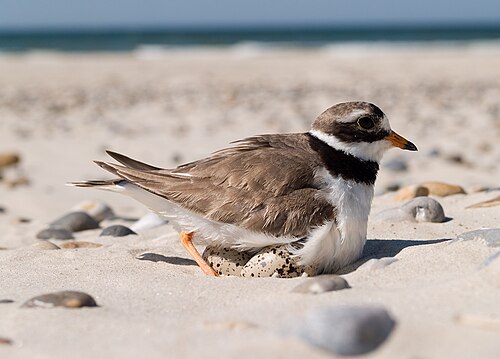
Common ringed plover
Charadriidae
Charadrius hiaticula · Least concern
To flush out prey, it sometimes trembles one foot on the ground. Only the two outer toes of the common ringed plover are slightly webbed; in the very similar semipalmated plover, once counted as the same species, all three are. It lays three or four eggs, one every one to three days, and both parents incubate.
Photo: Arnoldius (CC BY-SA 3.0)


